1. Fluvarium: The Living Laboratory in the Heart of the University
🧬 "AQUATERRA" Ecological Educational Complex Bucharest
Between 2004-2012, the Aquaterra Ecological Society built a unique research complex within the courtyard of the Faculty of Biology, unparalleled in the entire region.
The Aquaterra Educational Complex — comprising the Aquarium, Fluvarium I, and Fluvarium II — was awarded First Prize by the International Ford Motor Company Conservation Awards for its exceptional efforts in conserving indigenous plant and animal species.
 Ford Company Award.
This facility marked the birth of the first advanced research station for rare and threatened fish species, focusing on the study of their breeding biology, ecology, and ethology, with the ultimate goal of ecological restoration and restocking degraded aquatic habitats.
🏢 Central Pavilion Structure & Facilities
The project was designed as a multi-functional integrated complex, structured across distinct levels dedicated to education and cutting-edge research:
🌊 Ground Floor: Aquarium & Live Gene Bank
- Diversity: Over 400 aquariums housing more than 100 species of native and exotic fish, most of which were extremely rare.
- Refuge and Restoration: The aquarium's role extended far beyond education, functioning as a live gene bank — a critical refuge where threatened species from Romania's waters are preserved and artificially bred to restock natural environments.
🐢 First Floor: Terrarium & Hormone Induction Laboratory
- Chelonian Conservation: Covering an area of 230 sqm, 20 large terrariums were built for the captive breeding and rearing of the 3 turtle species native to Romania, all protected at the European level through the Natura 2000 Program.
- Scientific Center: This level also hosted the operational headquarters, the Association's main research laboratory, and the specialized laboratory for testing and hormone induction of rheophilic fish.
🌴 Second Floor: Tropikarium
- A faithful recreation of equatorial habitats (both terrestrial and amphibious), equipped with a dedicated collection of tropical flora and fauna.
📺 Animal Planet Club: Through a direct partnership with the renowned international television network Animal Planet, a dedicated student club operated within the complex. It hosted conferences, debates, and lectures on conservation, while providing young researchers with internet access to document their bachelor's and doctoral theses.
🌍 World Rarity: What is a Fluvarium?
To save rheophilic (current-loving) species, scientists engineered complex artificial habitats that accurately mimic the dynamics of a natural river: waterfalls, powerful rapids, eddies, and deep pools.
At the time of its opening, the Aquaterra Complex in Bucharest belonged to an extremely exclusive global elite. Only a handful of similar facilities existed worldwide:
- The Brooklyn Fluvarium (New York) – managed by the US Environmental Protection Agency (US EPA) and the US Fish and Wildlife Service.
- The Provence Fluvarium (L'Ardèche) – belonging to the National Nature Reserve of France.
- The Fluvarium of the Institute of Ecology in Bonn – Germany.
- The British Royal Society of Ecology Aquarium – United Kingdom.
🛠️ UB Fluvarium Technology
- 5 Distinct Habitats: The system hosted 5 running micro-habitats where the conservation and breeding of 5 different rare fish species were carried out simultaneously.
- Top Romanian Filtration: Each line benefited from its own biological filtration station based on the Biolife system, optimized by the Aquaterra team using innovative filter media designed and manufactured in Romania.
🏆 Pioneering the Controlled Breeding of Critical Species
Utilizing techniques developed in the Bucharest laboratory, the controlled breeding of 4 critical species from the national ichthyofauna was achieved for the very first time:
- 🐟 Comana Chub (Leuciscus celensis)
- 🐟 Thermal Rudd (Scardinius racovitzai) — the unique endemic species from the 1 Mai Baths
- 🐟 Souffia / Western Roach (Leuciscus souffia agassizi)
- 🐟 Steppe Pungitius / Black Sea Stickleback (Pungitius platygaster)
👑 Sturgeon and Ornamental Species Reserve
The complex demonstrated remarkable technological resilience, successfully hosting and maintaining specimens from all 4 native sturgeon species of the Lower Danube:
- 🐋 Beluga Sturgeon (Huso huso)
- 🦈 Danube Sturgeon / Russian Sturgeon (Acipenser gueldenstaedtii)
- 🐟 Sterlet (Acipenser ruthenus)
- 🐠 Stellate Sturgeon (Acipenser stellatus)
In addition to wild stock conservation, the two fluvariums successfully reared ornamental varieties of koi carp and goldfish, used as ecological models for landscaping and bio-design.
📸 Historical Photo Gallery (Bucharest Complex)
📌 Note: The images below illustrate the original research infrastructure and the studied biomass.
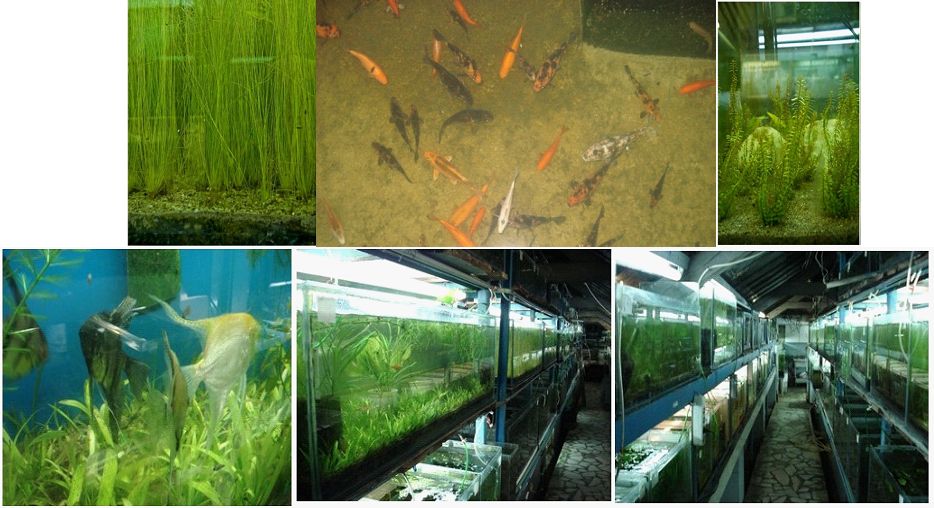 Fluvarium.
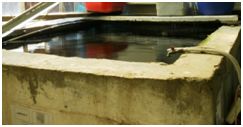 Fig 1. Types of concrete tanks used for rearing sturgeons and ornamental species.
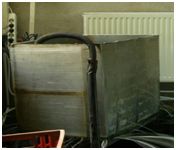 Fig 2. General view of the filtration stations used within the complex.
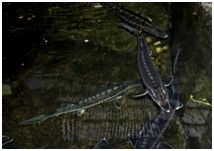 Fig 3. Sturgeons reared within the Fluvarium (stellate sturgeon – left, sterlet, Russian sturgeon - right).
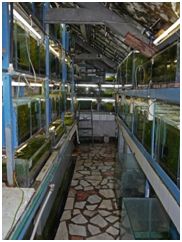 Fig 4. General view and setup of the aquarium batteries inside the building's greenhouse.
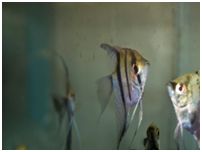 Fig 5. Exotic fish species reared within the Aquarium (Barbus sp., angelfish).